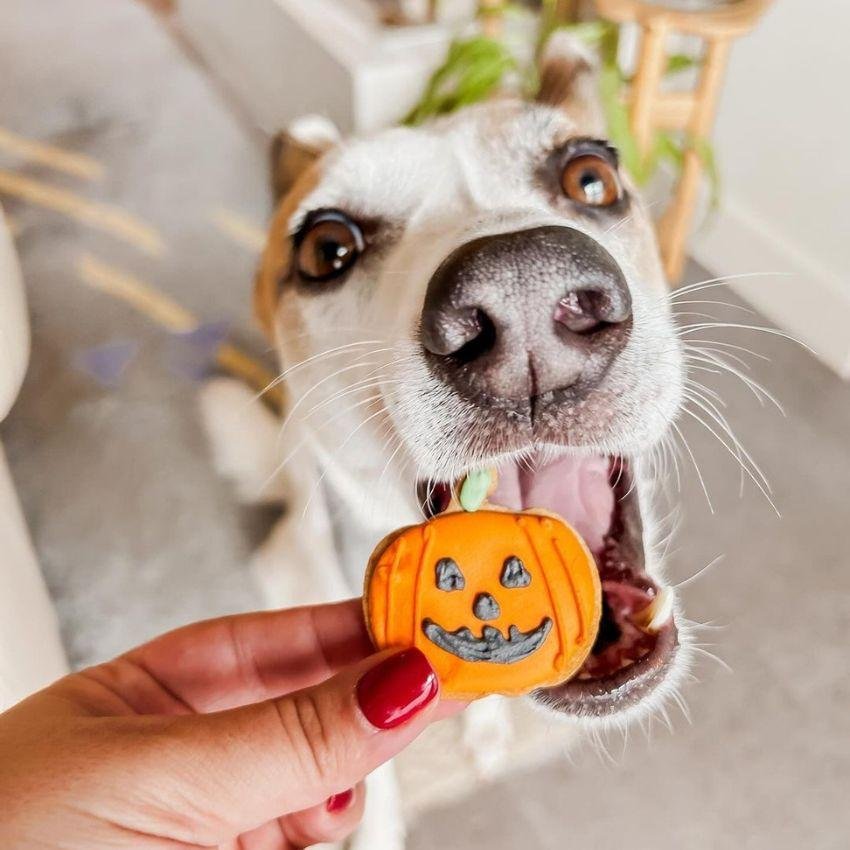
Here are a few safe treat ideas for dogs for Halloween.
Halloween is a great holiday for the whole family, but it can pose dangers for dogs. Curious dogs can easily find candy, chocolate, chocolate wrappers and sugary foods.
Dogs can beg for candy when their human family members are eating it, however, candy is not a safe treat for dogs. There is some chocolate in some candies and xylitol in sugar-free candies. Both can be quite harmful for health.
Fortunately, it’s not too bad your dog has to miss out on Halloween. You may provide your pet with easy-to-give, dog-safe treats from simple ingredients.
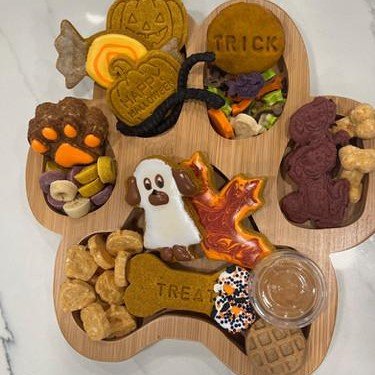
These are some simple homemade Halloween dog candies.
But why should dogs steer clear of Halloween candy?
There are a number of ingredients in Halloween candies that are not suitable for consumption by dogs.
There are chemicals in chocolate that are harmful to dogs. The level of risk will vary based on the type and quantity of chocolate consumed, and its size.
Even more dangerous sugar-free candy can be with the use of xylitol. Xylitol can lead to a quick decline in blood sugar levels and can cause serious illness.
Another concern is candy wrappers. They may choke or lead to an intestinal blockage if ingested.
That’s why it’s best to store human candy out of your dog’s reach in a closed container.
1. Pumpkin Dog Treats
Pumpkin is a simple ingredient to make dog treats at home.
Has water and fiber and can be combined with other simple ingredients.
Easy Recipe
Mix:
- 1 cup plain pumpkin puree.
- 1 egg
- 2 cups oat flour
Knead the dough and form little halloween bunnies.
Bake in oven at approximately 350°F (175°C) until treats are cooked. Serve only after they have cooled completely.
Don’t use pumpkin pie filling; use plain pumpkin.
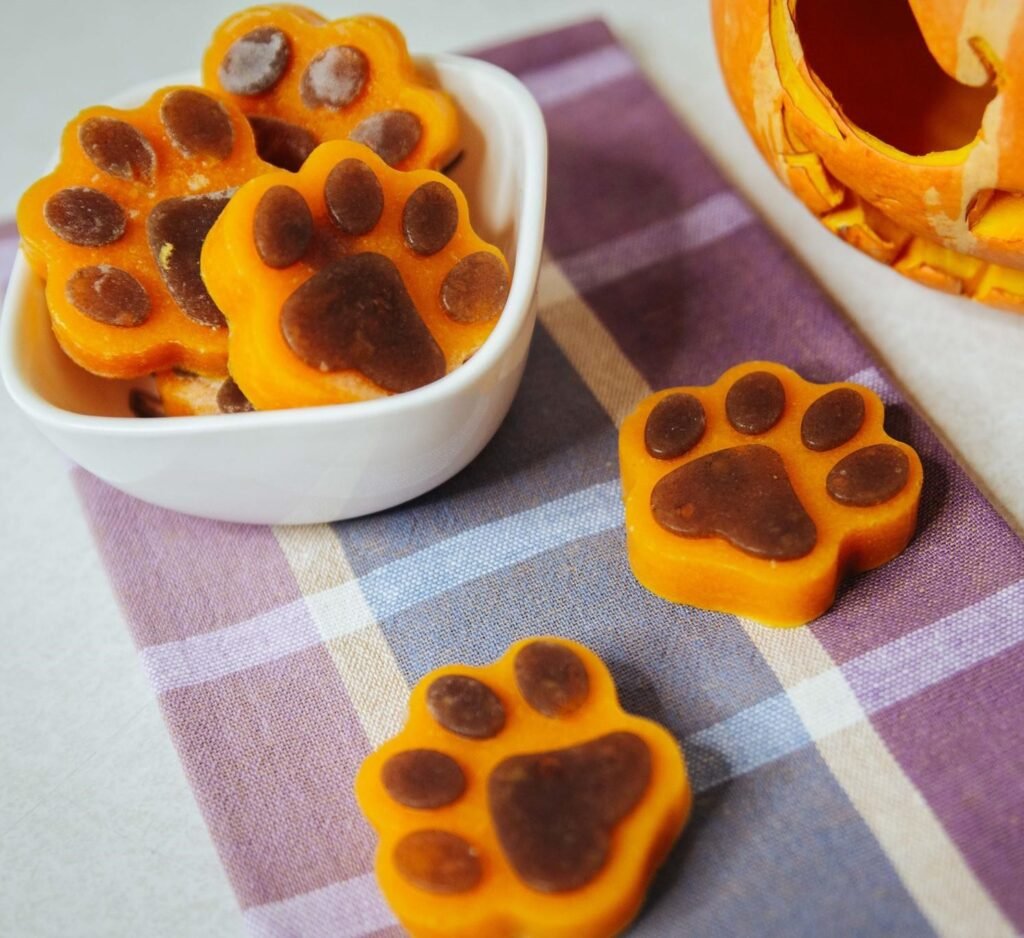
2. Frozen Pumpkin Bites
Frozen chunks of pumpkin make a great treat instead of candy.
Add a bit of water to plain pumpkin puree.
Pour into small silicone molds or ice cube tray and freeze until solid.
Feed your dog a little bit as a treat.
Very small amounts and watch puppies and small dogs carefully.
3. Apple Slices
Apple can be a healthy treat for dogs, if prepared properly.
Wash the apple and core and remove all seeds.
Divide up the apple so your dog can chew it.
Never add caramel, chocolate, sugar or other toppings.
It’s important to note that apple does have natural sugar, and feed sparingly.
4. Banana Bites
The bananas are naturally sweet – no need for added sugar.
Mash and freeze small portions of ripe banana or cut into small pieces.
Banana can also be added to plain pumpkin and oat flour to be used to create biscuits.
Use small quantities as bananas are a natural source of sugar and calories.
5. Carrot Treats
Carrots can be sliced into pieces for a simple snack or grated for a crunchy snack.
Wash the carrot and cut it into small pieces.
It can be served raw (if this is safe for your dog to chew) or cooked until soft.
Avoid salting, adding butter, sauces or seasoning.
Carrots can be cut into fun shapes for Halloween.
6. Blueberry and Strawberry Bites
Certain dogs will like small chunks of dog-friendly fruit.
Occasional treats can be blueberries and/or strawberries.
Wash fruits before serving and slice larger fruits into smaller pieces.
Please do not add whipped cream, chocolate, syrup or sugar.
Don’t change their diet too quickly, particularly when they have a sensitive tummy.
7. Xylitol-Free Peanut Butter Treats
Use peanut butter in homemade dog treats, as long as the peanut butter ingredient label is checked.
Use peanut butter that has no xylitol.
Add a little peanut butter to pumpkin and oat flour to create easy Halloween biscuits.
Don’t feed peanut butter with chocolate or lots of salt or sugar.
8. Plain Cooked Chicken
For dogs that like savory treats, plain cooked chicken is a simple Halloween treat.
Cook the chicken until it is well done and then take away all the bones.
Avoid adding onion, garlic, salt, spicy seasoning, butter or sauces.
Chop small pieces of chicken, and feed them as treats occasionally.
9. Homemade Pumpkin Yogurt Bites
If your dog doesn’t mind dairy, you can give them small frozen yoghurt treats.
Combine plain unsweetened yogurt and plain pumpkin puree.
Fill in small molds and place in the freezer.
Choose unsweetened, no-sugar or low-sugar yogurt.
However, if your dog gas, has diarrhea or other digestive issues when eating dairy, stop using it.
How many treats should a dog eat?
So how many treats can a dog have?
Beware that safe treats may cause problems when given too often.
The correct dosage is determined by the size, age, activity, health and typical diet of your dog.
When introducing foods for the first time, offer just one small piece.
Treats should only be a very small % of calories consumed per day. It is important not to give too much or they might get stomach upset or gain weight.
Ask your vet if there are any special treats and amounts for your dog if he is overweight or has a medical issue.
Keeping these foods away from your pet’s lips is important; dogs shouldn’t eat these things at Halloween.
Avoid giving these foods to your dog:
- Chocolate
- Xylitol
- Grapes
- Raisins
- Macadamia nuts
- Onion
- Garlic
- Alcohol
- Coffee
- Caffeinated drinks
- Candy wrappers
- Very salty foods
- Spicy foods
Also keep chocolate decorations and candy bowls out of your dog’s reach.
How to Make Halloween Safer for Dogs
It’s not just about treats during Halloween.
Dogs can get excited when they hear doorbells, voices that are louder than usual, or noises.
Give your dog a quiet place where they can relax.
Avoid using candles, electrical decorations and small toys with pets.
If your dog is wearing a costume, ensure that it does not impede breathing, walking, hearing, sighting, and/or movement.
Avoid putting a costume on your dog if they are not in the mood for it.
What If a Dog Eats Halloween Candy?
If your dog consumes chocolate, raisins, candy with the sweetener xylitol, or any other food that could be harmful, you should get veterinary attention or call a pet poison hotline right away.
Avoid waiting for symptoms.
Retain the product package for identification in case it is necessary to determine what ingredients were in the product.
Inform them of your puppy’s eating habits, the quantity and the timing of the incident.
Never induce vomiting, unless directed by a veterinarian.
Final Thoughts
Your dog doesn’t have to suffer from these types of holidays. There are plenty of safe Halloween dog candy alternatives to make the holiday enjoyable. Occasional rewards can be pumpkin treats, frozen pumpkin bites, apple pieces, banana, carrots, berries, plain chicken or peanut butter treats with care.
As with any candy, the first rule is to not give it to your dog. Some foods, like chocolate, xylitol, grapes and raisins, can be harmful.
Introduce new toys and give small amounts. Your dog’s normal complete and balanced food is what should be the bulk of the diet.
In case an accidental ingestion of a potentially toxic item occurs, get a vet’s advice immediately. Taking a few precautions, you can have a great Halloween with your dog, keeping him safe, comfortable and part of the festivities.